
By the time a buyer gets on a call with your sales team, they've pretty much already decided. That's why starting a B2B YouTube channel the wrong way costs more than a year of wasted videos. It costs you the deals that were decided before you ever got a meeting.
I'm not guessing. In its 2025 Buyer Experience study, 6sense found that B2B buyers were about 61% of the way through their process before they contacted any vendor. 94% had already ranked their favorite vendors before that first conversation. And the vendor at the top of the list won 77% of the time.
So the real competition isn't in your sales meetings. It happens before them, while the buyer researches on their own. A lot of that research happens on YouTube, and not only on phones. In May 2026, Nielsen reported that YouTube had 13.8% of all TV viewing in the US, more than any other media company. Your buyers watch YouTube at their desk, on their phone, and on the TV in their living room.
That's the opportunity. The problem is that most companies start without understanding how YouTube works. They spend a year making videos nobody watches, then decide YouTube doesn't work for their industry. I made a short video about this, and this post goes a bit deeper on each point.
1. YouTube doesn't send your videos to your subscribers
A lot of companies think a YouTube channel works like a newsletter. You build a list, you publish, it goes out to the list. That's not how it works.
YouTube has said openly that recommendations bring in more views than subscriptions or search. And it decides what to recommend by watching how people react. Do they click? How long do they stay? Do they share it, like it? YouTube even sends surveys asking viewers to rate what they just watched.
The good news: a brand new channel with zero subscribers can get views on its very first video, as long as the people who see it actually want to watch it. The bad news: your brand name doesn't help. A billion-dollar company and a small consultancy start in the same place. Every video is judged on its own.
2. Decide who your channel is for, and be more specific than feels comfortable
When I ask a company who their channel is for, the answer I hear most is "our customers." That's not an audience. That's everyone who has ever paid you. A procurement manager, an engineer and a CFO won't click on the same video.
Pick one buyer and one problem that buyer has. Not "people in manufacturing." Something like "maintenance managers who are sick of unplanned downtime."
Every time YouTube shows your video to someone who clicks and keeps watching, it learns a bit more about who your audience is. If every video talks to a different person, it never figures that out, and it stops recommending you. You can grow later. Once one audience watches you regularly, you add a second one. Starting broad and narrowing later is much harder, because by then YouTube has already received mixed signals.
3. Decide the title and thumbnail before anything else
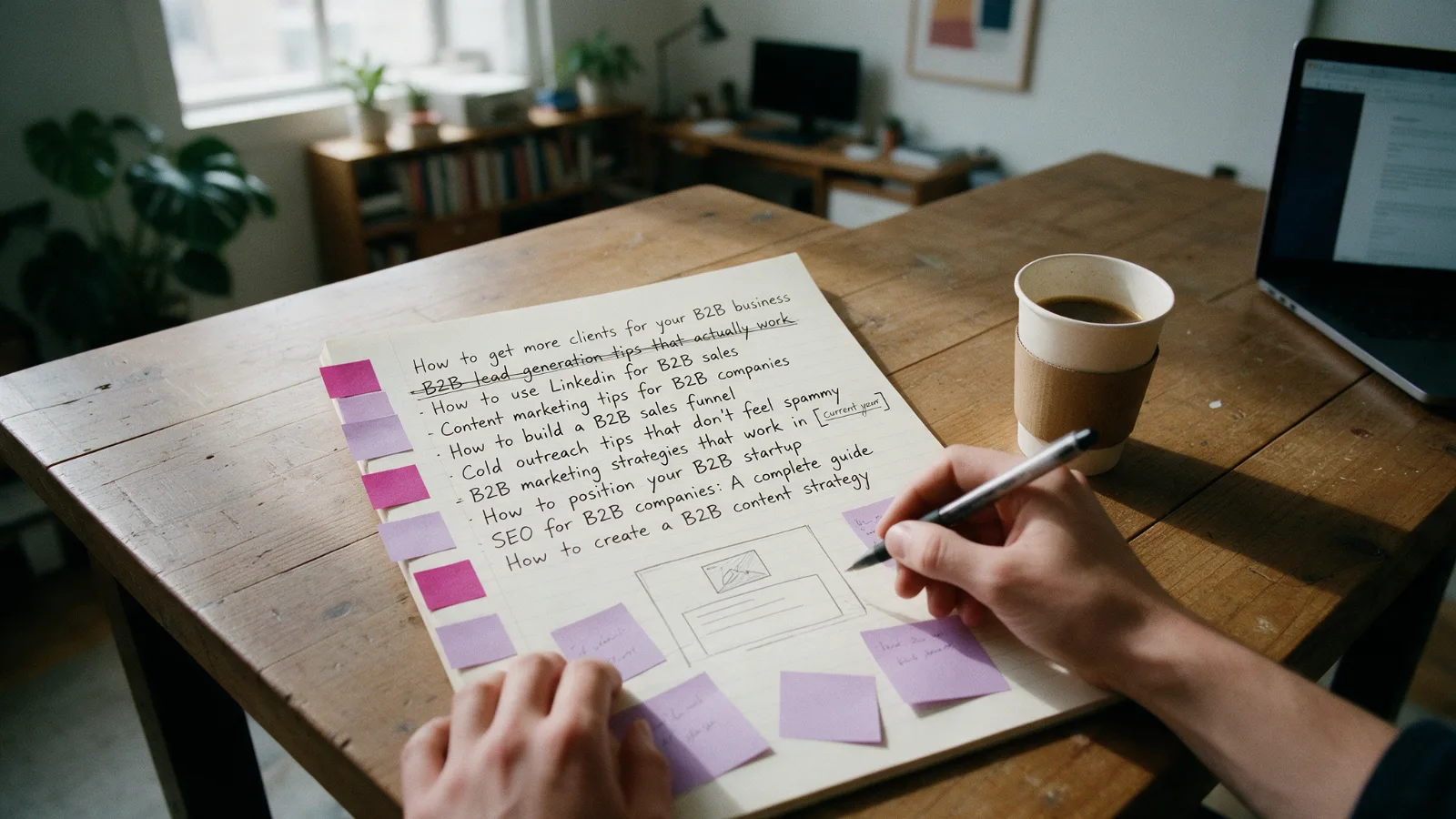
This is where most company channels lose, and I see it constantly. The team writes a script, records, edits, and right at the end someone spends ten minutes on a title and grabs a frame for the thumbnail. That's backwards.
The title and thumbnail are the only part of your video most people will ever see. YouTube's own help center says half of all channels and videos have a click-through rate between 2% and 10%. So even on a healthy channel, most people who see your video won't click. If they don't click, it doesn't matter how good the video is.
The people behind the fastest growing channels all work in the same order: idea, then title and thumbnail, and only then the script. They write ten or more titles before picking one. And they follow a simple rule. If you can't come up with a title and thumbnail you'd click on yourself, the idea isn't ready. You change it or you drop it. You don't film it and hope. If you want the practical side, here's how to write YouTube titles for business.
4. Your best video ideas are in your sales calls, not your marketing meetings
When a company sits down to decide what to make videos about, it usually starts with what it wants to say. A launch, company news, a new feature. The buyer doesn't care about any of that yet. They're still researching on their own and they haven't picked you.
What they care about is their own problem. And the questions they have about it already come into your company every week.
- Ask your sales team what they get asked on every call.
- Ask support what they keep explaining over and over.
- Look at the objections that show up right before a deal closes, or right before it falls apart.
Every one of those questions is a video. And those videos reach the buyer during that 61% of the process when they're not talking to anyone. Answer the question before your competitor does and you have a real shot at the shortlist before the first meeting. To turn those questions into a structure that compounds, read how to structure a B2B YouTube series that builds pipeline.
5. Measure business results, not just views
A B2B channel doesn't need millions of views. If what you sell has a high contract value, a video with 3,000 views from the right people can be worth more than a viral video with a million views from people who will never buy.
So set up tracking from day one:
- Use tracked links in your descriptions so you can see who goes from a video to your site.
- When new leads tell you how they found you, make sure YouTube is one of the options.
- Use your videos in sales. Send the right one before the first call so the buyer shows up already knowing how you think.
Then give it time. A channel isn't a campaign. A video you publish today can still bring in buyers two or three years from now, long after an ad would have stopped working. That only happens if you commit to at least a year and learn from every video, instead of judging the whole thing on the first five.
The 5-question check before you upload anything
- Do we understand that every video is judged by how people react to it?
- Do we know exactly who this channel is for?
- Do we have a title and thumbnail we'd click on ourselves?
- Does this topic come from a real question our buyers ask?
- Do we know how we'll measure if it's working?
If you can say yes to all five, you're already ahead of most companies on YouTube. If you already have a channel and it's barely getting views, start with these 5 fixes for B2B channels that don't generate leads, or see the full picture in our B2B YouTube channel blueprint.
Frequently asked questions
Is YouTube worth it for B2B companies?
Yes, if the channel is built around buyer questions and measured on business results. Buyers do most of their research before talking to any vendor, so being found during that research is where the value is.
How many subscribers does a B2B YouTube channel need?
Fewer than you think. YouTube recommends videos based on how viewers react, not on subscriber count. For high-value B2B offers, a few thousand views from the right buyers can be worth more than a viral video.
What is a good click-through rate for a B2B YouTube video?
YouTube says half of all channels and videos have an impressions CTR between 2% and 10%. Compare each video against your own channel average rather than a universal benchmark.
How long does a B2B YouTube channel take to work?
Plan for at least a year. Judge it on what you learn across many videos, not on the first five.
Sources: 6sense, 2025 B2B Buyer Experience study. Nielsen, The Gauge, May 2026. YouTube Help Center, Impressions and click-through rate FAQ.
Planning a B2B YouTube channel and want a second opinion before you start? Send me your idea and I'll tell you what I'd change.
Book a free call with Purple Fish